SQA x Le Sora Space x UMI Global Ventures
SRF Method - Flexible Seismic Reinforcement Technology
Product information
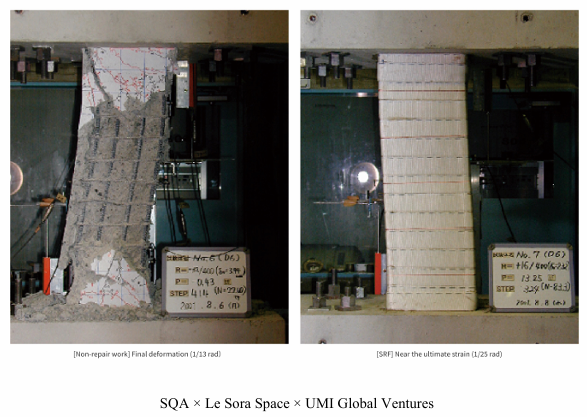
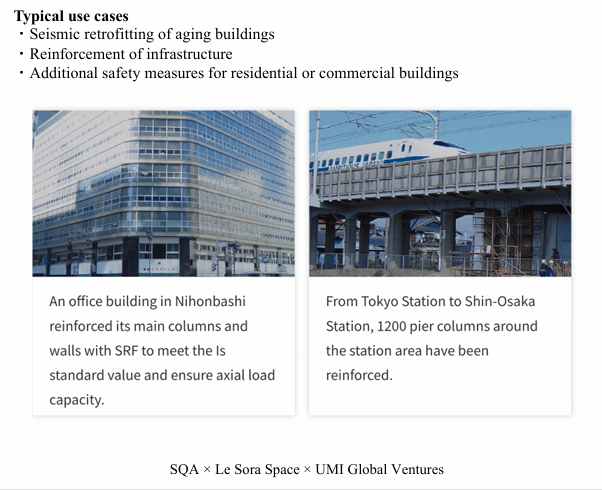
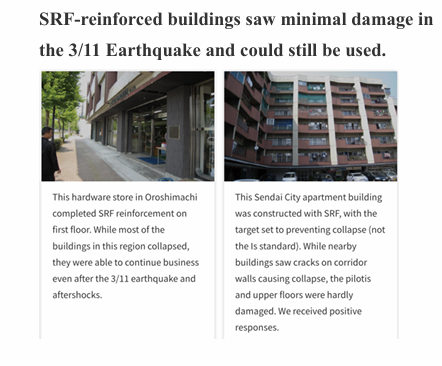
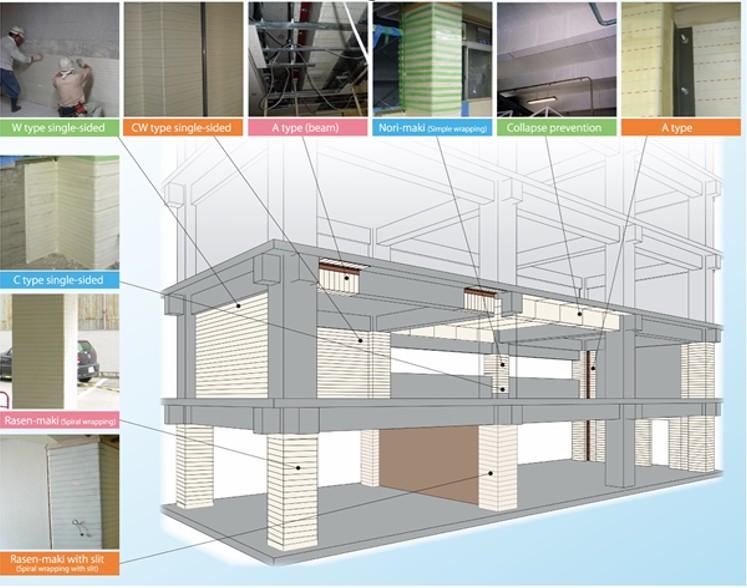
The SRF (Structural Reinforcement with Flexibility) Method is a seismic reinforcement system that strengthens buildings using high-elastic polyester fiber belts or sheets bonded with high-toughness polyurethane adhesive. Unlike conventional rigid reinforcement systems (steel plates or carbon fiber sheets), SRF materials remain flexible and ductile, allowing structures to deform safely during earthquakes. Key concept: "Flexible reinforcement that follows structural deformation." This improves a building's ability to absorb seismic energy while preventing collapse. Material: High-elastic polyester fiber with high-toughness solvent-free polyurethane adhesive. Thickness: Approx. 4mm. Tensile capacity: Approx. 16 tons horizontal tensile strength. Verified by University of Tokyo, Yokohama National University, and Japan Building Disaster Prevention Association through large-scale shaking table experiments. Applicable to reinforced concrete buildings, concrete shear walls, block walls, structural joints, and wooden structures. Provides four major structural effects: Damage Control (reduces crack propagation), Elastic Limit Improvement (extends elastic range), Vibration Control (distributes cracks and stabilizes deformation), and Fail-Safe Function (maintains axial load capacity and prevents collapse). More than 2,700 real construction projects completed.